7 easy ways to reduce your electricity bill at home


Improving the energy efficiency of your home is not a complicated or necessarily expensive process. Often it is the sum of small, conscious changes in daily habits that lead to a big result.
Reducing bills is the main motive for most people, but the benefits of an energy-efficient home don't stop there. When you consume less energy, you also contribute to reducing your carbon footprint and helping to protect the environment. In addition, a well-insulated and optimized home is much more comfortable to live in — warmer in winter and cooler in summer, without unpleasant drafts and temperature differences.
Use energy-saving light bulbs and lighting fixtures
Replace standard light bulbs with LED or other energy-saving lamps.
They use significantly less electricity and have a longer life, which in the long run reduces both electricity bills and the cost of replacing the bulbs.
Energy-saving bulbs can reduce energy consumption by up to 80% compared to traditional incandescent bulbs.
LED bulbs often have a lifespan of over 25,000 hours, which is significantly more than the usual 1,000 to 2,000 hours for standard bulbs.
This means that one LED bulb can last more than twenty years with moderate use, which drastically reduces the frequency of the need for replacement.
Switching to energy-efficient lighting also contributes to reducing the carbon footprint, as lower electricity consumption leads to fewer greenhouse gas emissions.
Use lighting with motion sensors
Very often we leave the lights on even when we are not in the room or room. Motion sensors detect if you are in the room and turn the lights on, then turn off the lights when it is no longer needed. There's no reason to waste energy illuminating an empty room, so motion sensors ensure your lighting is turned on only when needed.
Optimize heating and cooling
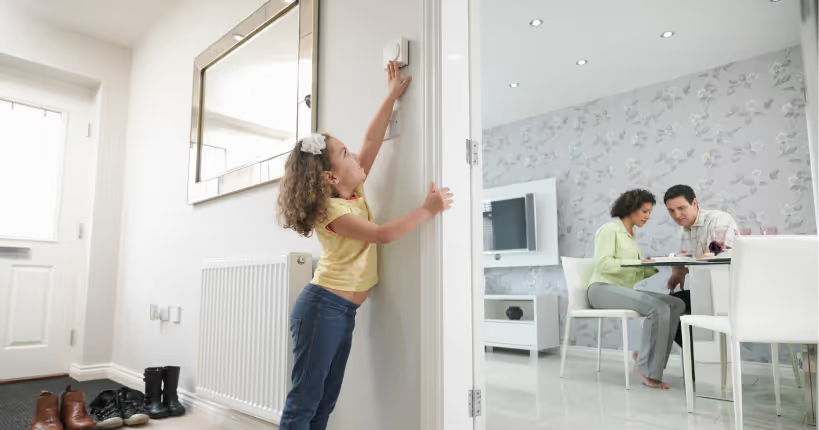
Heating and cooling account for the largest share of your energy costs. A very slight decrease in temperature in winter or an increase in temperature in summer can lead to significant savings on your previously high electricity bills. Lowering the thermostat by just 1-2 degrees in winter can save up to 10% on your heating bill. Investing in your programmable or smart thermostat allows you to automatically adjust the temperature when you sleep or are away from home, ensuring maximum efficiency without compromising comfort.
Another tip in this direction is to review how energy efficient your air conditioners actually are and whether it is not time to replace them with new, more modern and more efficient ones, which, however, can easily pay for themselves by saving electricity in a short time after the start of their operation.
Use household appliances wisely and replace them with energy-saving
When it's time to replace electrical appliances in your home, it's important to target appliances with a high energy class.
These appliances, marked with energy efficiency labels, are specially designed and optimized to use less electricity while maintaining or even improving their performance and functionality.
This means that although the initial investment may be higher compared to less efficient appliances, in the long run they lead to significant energy savings and reduce electricity costs.
Modern appliances have energy-saving modes that are worth using. Here are some ideas:
- Washing machine:Release it only when it is full. Use washing at a lower temperature (30-40°C), as most of the energy goes to heating the water.
- Dishwasher:Always run it full and use the “Eco” program. If there is an option, turn off the drying with heating and let the dishes air dry.
- Dryer:Clean the moss filter after each use to ensure optimal airflow and faster drying.
Improve the insulation of your home
Good insulation prevents heat loss in winter and coolness in summer. One of the biggest losses of heat (or coolness in summer) comes from poorly sealed windows and doors. Even small gaps can create a constant draft, causing your heating or air conditioning system to work overtime. You can easily solve this problem with:
- Self-adhesive sealing strips for window frames.
- Silicone or sealant to fill cracks around the frames.
- Special seals for under the doors that stop cold air.
Turn off devices when not in use
Many devices continue to Consume electricity even when not in use, but are plugged into the outlet to maintain their operation, albeit at minimal energy levels.
Unplug appliances to reduce “invisible” energy consumption, which, however, shows up well enough in monthly electricity bills.
It's so simple, but few think of this easy technique for lower electricity bills. The easiest way to deal with this is to plug them into a switch with a switch and turn it off when you are not using them.
Do a quick energy audit of your home
Take a look at your last electricity bill. See what your consumption is and try to find out which activities or appliances contribute the most to it. You can also buy an inexpensive consumption meter that plugs into the outlet and shows you exactly how much each device spends.
These tips do not require large investments, but can lead to significant savings in the long run. Every step you take — from replacing a light bulb to sealing a window — is a step toward lower bills, a cozier home, and a cleaner planet.